
'There is not one discussion with a client without a discussion around AI. They all have it on their mind.'

In the jobs created in 2022, the share of those in the age group 18-25 increased to at least a five-year high of 56 per cent. A Business Standard analysis of the monthly Employees' Provident Fund Organisation (EPFO) payroll data shows in 2018 the share of youths among the new EPFO subscribers was 50.9 per cent. The National Statistical Office is releasing the monthly EPFO payroll data since April 2018 as part of the government's effort to track formal-sector employment by using payrolls as an instrument.

The equity cult has grown at a rapid pace in India in the last few years, with retail investors latching on to the stock markets like never before. At 126.6 million, the number of dematerialised (demat) accounts, where investors hold their securities in electronic form for trading purposes, are at record high levels. The growth rate, on an annualised basis, stood at 27 per cent in 2022-2023, up from barely 6 per cent a decade ago.

Brokerages expect Nifty50 companies to have cumulatively witnessed strong double-digit growth in their earnings in the first quarter of FY24 (Q1FY24). This growth in the combined earnings is expected to have been driven by banks, automakers, and oil & gas companies. Other sectors may report muted profit growth.

Manufacturing activities in India remained robust and price pressures were contained in October as new orders and production rose at a slower but stronger pace, according to a monthly survey released on Tuesday. The seasonally-adjusted S&P Global India Manufacturing Purchasing Managers' Index (PMI) was up from 55.1 in September to 55.3 in October. The October PMI data pointed to an improvement in overall operating conditions for the 16th straight month.

The S&P BSE Auto Index has been one of the biggest outperformers among sectoral indices over the past year with returns of 26 per cent. By comparison, the benchmarks - the National Stock Exchange Nifty50 and the S&P BSE Sensex - managed about 6-8 per cent during this period. Improving demand, falling raw material costs, and rising product realisations, led by the premiumisation of portfolios, have led to a revision of growth estimates and upgrades by domestic brokerages.

While analysts assessed One97 Communications (Paytm) Q1FY24 results as in-line with guidance, the market was disappointed and the stock fell by around 5 per cent. Paytm reported a net loss of Rs 360 crore, but revenue grew 39 per cent year-on-year (YoY) to Rs 2,340 crore. It was supported by strong growth in gross merchandising value (GMV), higher disbursements and the addition of subscription devices.
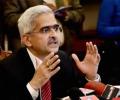
Amid prolonged uncertainty, continued policy support will be crucial for sustained economic recovery from the coronavirus pandemic, Reserve Bank Governor Shaktikanta Das said at the recent meeting of the Monetary Policy Committee. "In this period of prolonged uncertainty, it would be wise to remain agile and respond in a gradual, calibrated and well telegraphed manner to the emerging challenges," opined Das, according to the minutes of the MPC meeting released by the Reserve Bank on Thursday. Observing that economic recovery from the pandemic remains incomplete and uneven, he said, "continued support from various policies remains crucial for a sustained recovery." The governor said the renewed surge in international crude oil prices, however, requires close monitoring.

Axis Bank has strengthened its positioning -- on both the assets and liability side -- and it may be set to deliver sustained improvement in performance. The valuation gap between Axis Bank (which trades at 1.4x core book value (or BV) and peers like ICICI Bank (valued at 2x BV) is expected to narrow.

Titan posted better than expected revenue growth in the March quarter of the financial year 2022-23 (Q4FY23), powered by strong demand trends in the jewellery and watch segment. Standalone jewellery sales for the firm were up 24 per cent year-on-year (YoY) on a slightly lower base and aided by like-to-like growth of 19 per cent. The company highlighted that new buyer growth was at 15 per cent while average ticket size was up 8 per cent.

Nineteen people have been killed in rain-related incidents in Uttar Pradesh in the past 24 hours, the state relief commissioner's office said Monday evening.

India's manufacturing sector growth steadied in May, with new orders and production increasing at similar rates to those registered in the previous month, while demand showed signs of resilience and improved further in spite of another uptick in selling prices, a monthly survey said on Wednesday. The seasonally adjusted S&P Global India Manufacturing Purchasing Managers' Index (PMI) stood at 54.6 in May, little changed from 54.7 in April, pointing to a sustained recovery across the sector. The May PMI data pointed to an improvement in overall operating conditions for the eleventh straight month.

Despite rising interest rates, and high inflation, the banking sector is doing well, on the back of a recovering economy. The last couple of quarters indicate credit demand is picking up and Return on Assets (RoA) is more than acceptable at the moment. The PSU bank pack may be more interesting at the moment simply due to being valued at far lower multiples than the private banks.

It may be a little early to cheer the recovery in the fast-moving consumer goods (FMCG) space as a deceleration in discretionary demand, after the festival season, may offset fragile rural recovery, analysts have cautioned. "The overall demand environment for staples remains muted, while discretionary demand trends have seen some deceleration after the festival season. "We believe margins in staples have bottomed out, but we expect only a gradual uptick with the ongoing softening in raw material prices.

'People now recognise rapping as a profession.' 'We are able to tell our relatives that we rap for a living.'

'India has the potential to do a lot more to take advantage of the time today where we stand to gain, geopolitically and in terms of market attractiveness.'

A total of 415 million people moved out of poverty in India within just 15 years from 2005/2006 to 2019/2021, the United Nations said on Tuesday, highlighting the remarkable achievement by the world's most populous nation.

Notwithstanding lower growth rates recorded in the first quarter (Q1) of 2023-24 (FY24), which spanned from April to June, footwear stocks have seen some gains in the past two trading sessions. Bata India saw an increase of approximately 5 per cent, driven by positive expectations surrounding a potential tie-up in the sports/athleisure segment. This development is viewed favourably due to the segment's higher growth rates.

Brand India's societal divisions and distortions have remained as much relevant in 'liberal' America and Europe as it still is in the structurally stratified Indian society of the 21st century, observes N Sathiya Moorthy.

India has surpassed China to become the world's most populous nation with 142.86 crore people, shows the latest United Nations data, even as UN projections estimate that the country's population is expected to grow for the next three decades after which it will begin declining.

India Inc could be embarking upon a new phase of capital expenditure (capex) cycle, observed analysts, and suggest its revival would lead to a rerating of industrial stocks. Assisted by a property upcycle, analysts at Jefferies said several government initiatives were likely to drive capex. Indicators, they said, include a private project announcement at Rs 25 trillion for 2022-23 (up 150 per cent from pre-pandemic levels) and credit growth at about 16 per cent, which is closer to pre-pandemic highs.

The Indian economy recovered from the Covid-induced downturn during 2022 and is poised for further improvement in the coming quarters though downside risks emanating from geopolitical tensions, strengthening dollar and elevated inflation will continue. The positive trajectory in the growth trend and improved fundamentals will help the nation in neutralising the impact of global headwinds which are expected to have a bearing on the country's exports in the months to come. The challenges before the government and the Reserve Bank in the new year would be to arrest inflation, check declining value of rupee against US dollar and promote private investment and growth, with a view to ensure that the country remains one the fastest growing major economies of the world.

It would not be surprising if India, the world's largest producer of milk, has to resort to imports to meet the elevated summer demand, states Surinder Sud.

The collections from Goods and Services Tax (GST) grew by 15 per cent to over Rs 1.49 lakh crore in December 2022, indicating improved manufacturing output and consumption demand, besides better compliance. This is the 10th month in a row that the revenues have remained above the Rs 1.4 lakh crore mark. The collection in November was about Rs 1.46 lakh crore. "The gross GST revenue collected during December 2022 is Rs 1,49,507 crore, of which CGST is Rs 26,711 crore, SGST is Rs 33,357 crore, IGST is Rs 78,434 crore (including Rs 40,263 crore collected on import of goods) and cess is Rs 11,005 crore (including Rs 850 crore collected on import of goods)," the ministry said in a statement.

Through the past 12 months, the Bank Nifty has risen 55%

With the reporting of Omicron, a highly mutated variant of SARSCoV-2 virus and its classification as a Variant of Concern (VoC) by the World Health Organisation (WHO), the Union Ministry of Health revised its 'Guidelines for international arrivals', Mandaviya said in a written reply.

Since its October high last year, the stock of innerwear major Page Industries has been on a downtrend, shedding a little over 30 per cent of its market value. Higher competitive intensity, muted volumes, pressure on margins, and rich valuations have led to downgrades for the stock. The October-December quarter (third quarter, or Q3) performance was lower than the Street's expectations - both on volumes/sales and margins.

The recovering valuations, will lead to enhanced optimism among investors about funding startups.

Kotak Bank was the top gainer in the Sensex pack, rising over 3 per cent, followed by IndusInd Bank, Bajaj Finance, HDFC Bank, ICICI Bank, Bajaj Finserv, Maruti and SBI.

As part of the deradicalisation strategy, the army, with the cooperation of the Union Territory administration, has undertaken a series of initiatives.

Foreign investors pumped in Rs 11,119 crore in the Indian equities in December, making it the second consecutive monthly inflow, despite increasing concerns over the re-emergence of Covid-19 cases in some parts of the world. However, foreign portfolio investors (FPIs) have turned cautious in recent days. The inflow in December was much lower compared to Rs 36,239 crore invested by FPIs in the month of November, data with the depositories showed.

Sustaining positive momentum for the 14th straight month, equity mutual funds attracted a net sum of Rs 15,890 crore in April amid heightened volatility in stock market and consistent selling by foreign portfolio investors. This was much lower compared to a record net inflow of Rs 28,463 crore seen in the preceding month, data from the Association of Mutual Funds in India (AMFI) showed on Tuesday. The lower quantum of net inflow from the previous month could be attributed to investors going slightly cautious given the ongoing challenges to the investment environment, Himanshu Srivastava, associate director - manager research, Morningstar India, said.

The headline for corporate profit growth has been very encouraging in the July-September quarter (Q2) of 2023-24 (FY24), with the combined net profit of listed companies up by 38 per cent year-on-year. However, the earnings distribution has been very lopsided, with most of the growth coming from public-sector oil-marketing companies (OMCs), banks, non-bank lenders, automobile (auto) companies, and cement producers. By comparison, companies from information technology services, fast-moving consumer goods (FMCG), retail, and consumer durables were disappointed, experiencing a sharp slowdown in net sales growth and a relatively muted increase in reported net profit.

A hallmark of some new businesses today is that they seek to use the brute force of capital, combined with smart technology and operations, to create new needs that you didn't even know existed, the chairman of Aditya Birla group said in a blog post on the trends for the new year.

HCL Tech was the top gainer in the Sensex pack, rising over 4 per cent, followed by TCS, Bajaj Finserv, Nestle India, Bharti Airtel, Bajaj Finance and Tech Mahindra. NSE Nifty advanced 45.95 points to 16,496.45.

The actors looked in-sync as they turned showstopper for Satya Paul India.

The March quarter (Q4) of the ongoing financial year (FY23) may see cement companies report better financial numbers as input costs ease, pricing action resumes, and cement demand remains firm. While companies have been cautiously optimistic about their outlook, analysts and sector experts remain bullish. In its latest report on the cement sector, brokerage IDBI Capital said that it expected earnings before interest, tax, depreciation, and amortisation (Ebitda) per tonne for cement companies to improve by Rs 200-300 sequentially in Q4.

The rupee depreciated by 37 paise to close at 79.62 against the US dollar on Thursday despite sustained foreign capital inflows and a positive trend in equities. At the interbank foreign exchange market, the local currency opened at 79.22 and saw an intra-day high of 79.22 and a low of 79.94 against the American currency. It finally ended at 79.62, down 37 paise over its previous close of 79.25.

Moody's Investors Service on Thursday said India's rising vaccination rate, low interest rates and higher public spending drive the positive outlook for corporate sector.

In a letter to states and UTs, Union Health Secretary Rajesh Bhushan stressed on monitoring and reporting of district-wise influenza-like illness (ILI) and severe acute respiratory illness (SARI) cases in all health facilities on a regular basis for detecting the early rising trend of cases.
